The World Health Organization’s Global Health Observatory emphasizes global mental health challenges and advancements, highlighting the integration of artificial intelligence (AI) in mental healthcare. A key study by Wainberg et al. (2017) discusses research-to-practice gaps, while recent studies explore how AI, particularly large language models, can enhance clinical decision-making and improve therapeutic interactions. Research has demonstrated that AI can assist in providing mental health assessments and improving patient outcomes, as documented in various publications, including the J. Med. Internet Res. and Nature. The efficacy of digital mental health interventions, including apps and chatbot therapy, is also under scrutiny, revealing both potential benefits and risks. As AI continues to evolve, understanding its implications for mental health professionals and patients is crucial for informed integration in therapeutic settings. Continuous evaluation of these technologies will shape future mental healthcare practices, ensuring they meet safety and efficacy standards.
Source link
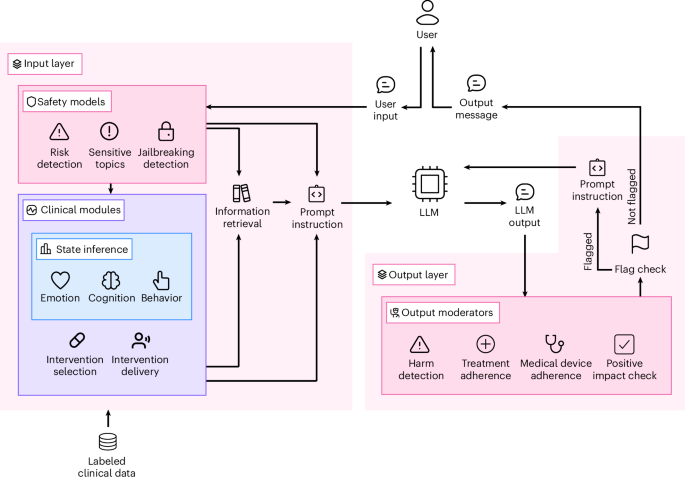
Enhancing Psychotherapy Interactions: A Cognitive Layer Architecture for Optimizing Large Language Model Performance
Share

Read more