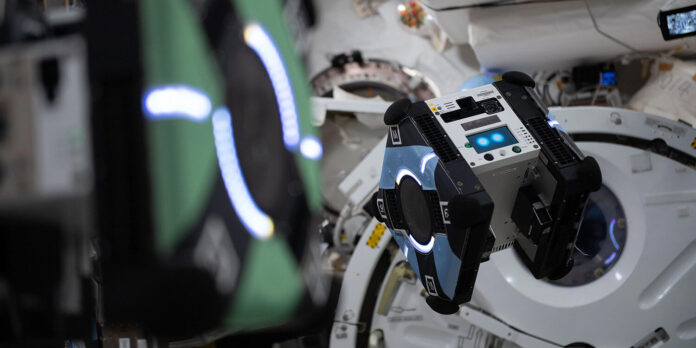
Pioneering AI Navigation on the International Space Station
In a groundbreaking experiment led by Stanford University, NASA’s Astrobee robot has utilized artificial intelligence (AI) for autonomous navigation aboard the International Space Station (ISS). This innovation marks a crucial step forward for robotics in space, tackling the complexities of a microgravity environment.
Key Highlights:
- First of Its Kind: AI-assisted control for robots on the ISS.
- Improved Efficiency: Paths were planned 50-60% faster using machine learning.
- Enhanced Safety: The AI system supports safety-critical optimization methods without compromising safety.
- Real-World Testing: Successful navigation in tight, cluttered areas showcased its potential for future missions.
As robots journey farther from Earth, autonomy will be vital. This advancement offers a glimpse into a future where robots can operate more independently, crucial for ambitious missions beyond our planet.
🚀 Join the conversation! Share your thoughts on AI’s role in space exploration!
