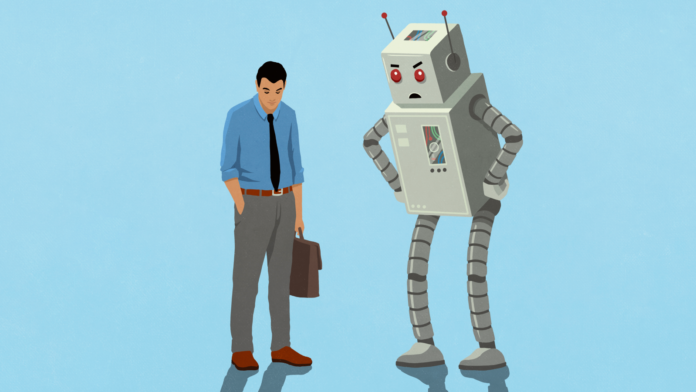
Researchers have found that allowing artificial intelligence (AI) to communicate more like humans enhances its effectiveness in debates and complex tasks. Traditional AI communication is rigid, adhering to a sequential format that lacks the dynamic nuances of human conversation. By integrating social cues—such as interruptions and silence—into large language models (LLMs), scientists observed improved collective intelligence and accuracy.
Yuichi Sei, a professor at Tokyo’s University of Electro-Communications, and his team designed a framework where LLMs exhibit various personalities based on the “big five” traits: openness, conscientiousness, extraversion, agreeableness, and neuroticism. They tested communication models in dynamic speaking orders, showing that allowing interruptions improved accuracy from 68.7% to 79.2% in debates. The research emphasizes the potential for personality-driven AI to enhance collaborative decision-making in future interactions with humans and other AI, paving the way for innovative applications in creative collaboration and complex problem-solving.
Source link
