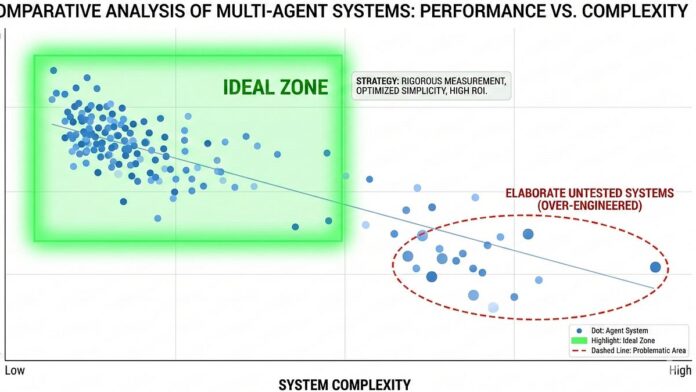
In the evolving landscape of AI agents, automation is reshaping knowledge work in structured fields like accounting. However, building reliable AI systems requires more than just effective prompts; it demands careful architectural planning. Effective AI agents consist of three core components: Tools, which facilitate specific actions (e.g., API calls), Skills, which leverage multiple tools for complex workflows, and Context Files that guide decision-making.
The success of AI agents hinges on supporting components like memory systems for continuity, orchestration frameworks for task coordination, and monitoring for performance evaluation. Recent innovations aim to enhance flexibility in orchestration, while emerging operational memory approaches save successful workflows as persistent procedures. Nonetheless, experiments have shown that adding layers like context files might not yield expected improvements. Effective implementation of AI agents involves systematic testing to measure performance improvements, highlighting that engineering precision trumps complexity in achieving reliable outcomes.
