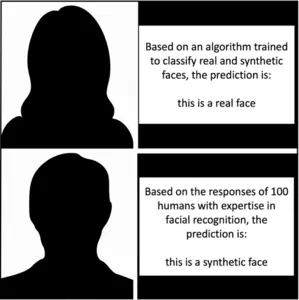
A recent study from Lancaster University investigates how reliance on Artificial Intelligence (AI) in decision-making can lead to biases. Published in Scientific Reports, it reveals that individuals with a favorable view of AI are more prone to being misled by AI tools, particularly in evaluating the authenticity of faces. The study involved 295 participants judging 80 facial images, half of which were real and half generated by AI. Participants received guidance on authenticity, which was correct only half of the time. The findings indicate that positive attitudes toward AI diminish the ability to distinguish between real and synthetic faces, particularly when AI guidance was provided. Dr. Sophie Nightingale emphasized the potential for AI support tools to impair decision-making rather than enhance it, highlighting the need for further research on human interactions with AI in various contexts. Understanding AI’s impact on cognition is critical amid growing reliance on technology for decision-making.
