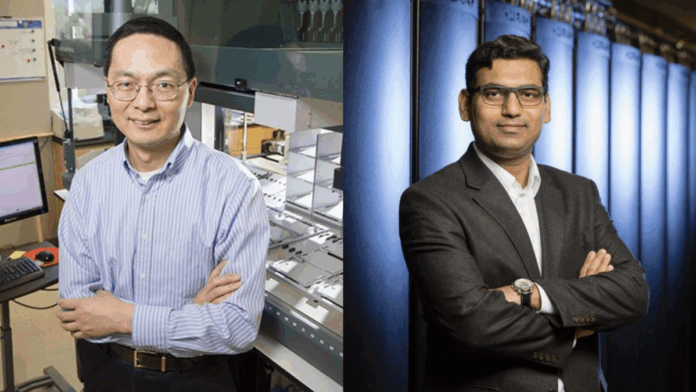
Researchers at the University developed the EZSpecificity AI model to analyze enzyme-substrate binding for drug discovery and synthetic biology. Led by Huimin Zhao and Diwakar Shukla, the model employs machine learning to predict which chemicals (substrates) will interact effectively with specific enzymes, vital for advancing medical and biological research. Enzymes accelerate biochemical reactions, making understanding their interactions crucial for innovation in drug development. EZSpecificity uses a dual-input algorithm to predict interactions between chemical groups and enzyme residues, achieving 91.7% accuracy—significantly better than previous models. The model was trained on extensive datasets, PDBind+ and ESIBank, combining computational and experimental data. Plans are underway to create an open-source website for public access, aiming to refine the model further by incorporating parameters like Gibbs free energy. This enhanced tool could revolutionize enzyme engineering and biocatalysis by predicting optimal chemical reactions and improving overall research efficiency.
Source link
Share

Read more