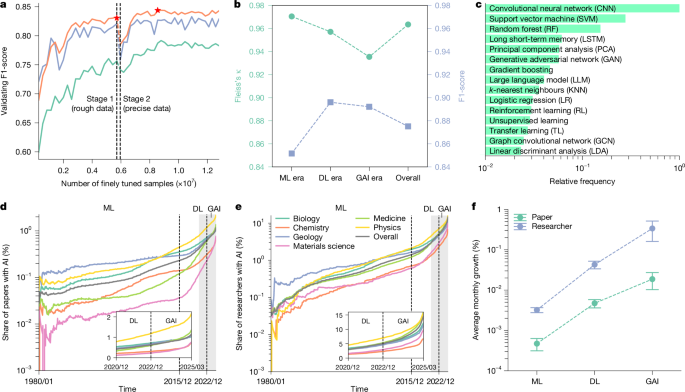
The article “Scientific Discovery in the Age of Artificial Intelligence” by Wang et al. (2023) explores the transformative impact of AI on scientific research. It highlights how AI technologies, such as machine learning and deep learning, are revolutionizing the scientific method by enhancing data analysis, accelerating research processes, and enabling novel discoveries across disciplines. Key advancements like AlphaFold for protein structure prediction and AI-driven autonomous research highlight these changes. The article also discusses ethical implications and the need for transparency in AI applications, emphasizing the importance of regulatory oversight. The integration of AI not only augments human capabilities but also raises questions about authorship and scientific integrity. By examining case studies and diverse applications, the article provides insights on how AI can optimize research efficiency and foster interdisciplinary collaboration, ultimately reshaping the scientific landscape and suggesting future directions in scientific inquiry. This comprehensive overview serves as a guide for researchers navigating AI adoption in their work.
Source link