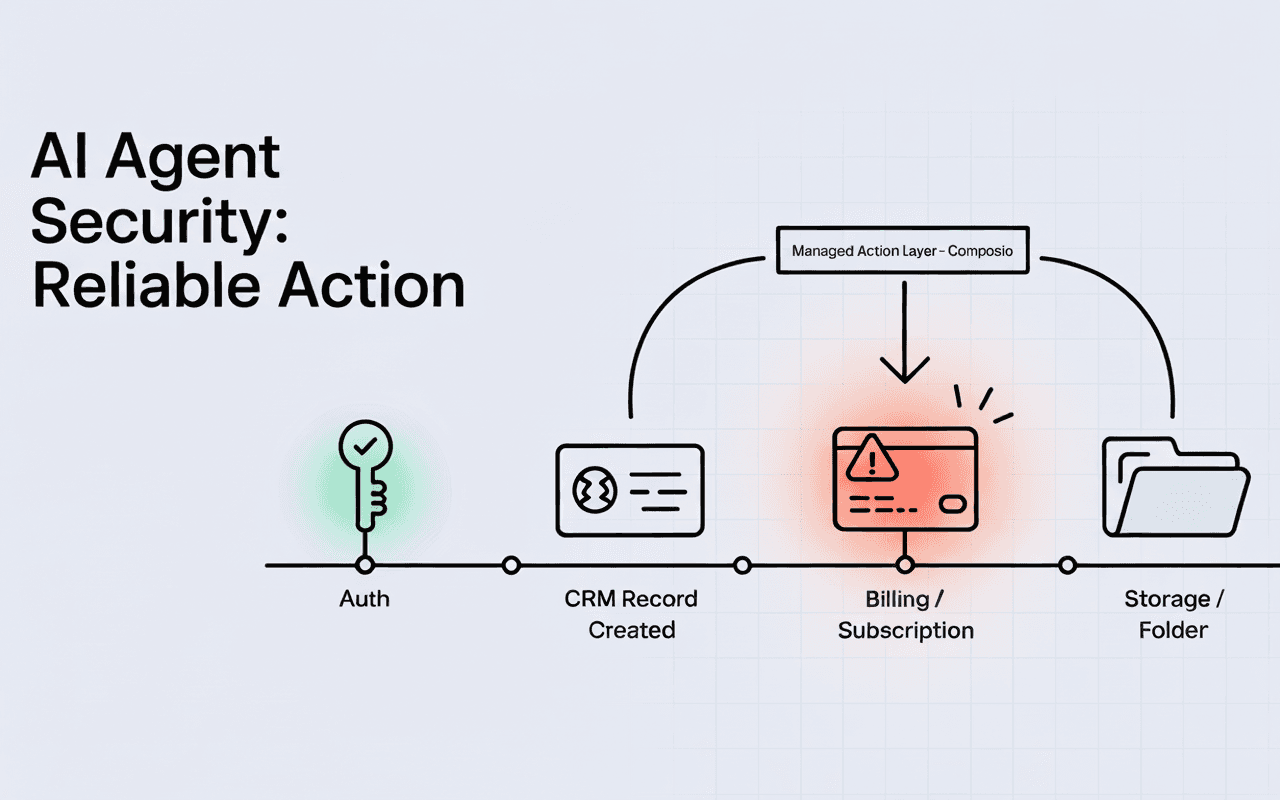
Understanding Action Reliability in AI: A Critical Security Pillar
In the ever-evolving landscape of AI, ensuring Reliable Action has emerged as a crucial, yet often overlooked, security pillar. A recent incident involving Replit’s AI tool emphasizes this risk, highlighting the catastrophic potential of silent failures in automated processes.
Key Insights:
- Reliable Action Defined: It ensures that actions are successfully completed, distinguishing between agent identity security (Authentication) and operational reliability.
- Common Risks:
- Data Integrity Failure: Silent failures can lead to orphaned records, creating significant data cleanup challenges.
- Self-Inflicted Denial of Service: Poor error handling in agents can inadvertently trigger attacks on critical systems.
- Expanding Attack Surfaces: Each new tool integration increases vulnerabilities.
Best Practices:
- Saga Orchestration Pattern: Manages complex workflows with built-in rollback mechanisms.
- Resilience Patterns: Implement strategies such as exponential backoff and circuit breakers to prevent cascading failures.
Action reliability isn’t just operational—it’s a security imperative.
Explore more and fortify your AI practices today! Share your thoughts below and let’s drive the conversation on secure AI systems!