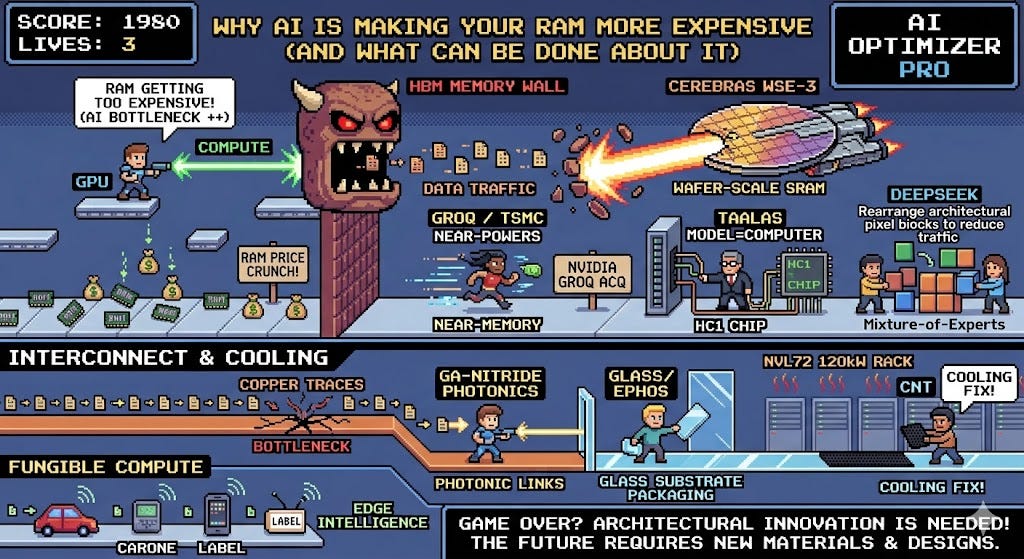
Rethinking Semiconductor Strategies Amidst RAM Price Surge
As AI applications burgeon, the demand for memory, particularly RAM, faces unprecedented challenges. Recent discussions highlight the urgent need to rethink semiconductor architectures to alleviate current pressures. Here are key insights:
- High-Bandwidth Memory (HBM) Trade-offs: Modern GPUs utilize 3D-stacked HBM, sacrificing bit density for increased bandwidth. This structural overhead complicates meeting soaring memory demands.
- Production Constraints: Current AI requirements could demand 170,000 DRAM wafer starts per month per gigawatt, far exceeding manufacturer’s capacities.
- Coordination Challenges: Major industry players like Nvidia and TSMC face a coordination failure—each hesitating to expand capacity based on unvalidated demand projections.
Exploring Alternatives
Innovative strategies are emerging:
- Near-Memory Compute: Reduces data movement, enhancing efficiency.
- Flexible Integrated Circuits: Could lessen competition for DRAM by introducing affordable computing solutions.
The semiconductor landscape is evolving, but immediate relief may take time. For industry enthusiasts, now is the moment to stay informed and engaged.
👉 Share your thoughts and let’s discuss the future of tech in the comments!